

Missing a hidden defect can turn a promising rental into a cash‑flow nightmare. Investors who skip the home inspection before closing often pay thousands in surprise repairs. This guide shows you exactly what to look for, how the process works for an investment property, and how to turn the inspection report into a negotiating tool.
By the end of this read you’ll know the key systems to evaluate, the costs you can expect, and how to use the findings to protect your DSCR loan and cash‑flow model.
What Is a Home Inspection Before Closing?
A home inspection is a safety and quality check on a property that’s about to change hands. The inspector walks through the house, looks at the roof, foundation, plumbing, electrical, HVAC, and any visible structural parts. They note anything that isn’t working right or looks like it could fail soon. The result is a detailed report with photos and notes. The buyer uses that report to decide whether to move forward, ask for repairs, or renegotiate the price.
The same process applies whether the buyer is a first‑time homeowner or a seasoned investor. For investors, the inspection becomes a key piece of the cash‑flow puzzle because it tells you what you’ll spend after you close.
According to standard home inspection guidelines, an inspection covers the structural aspects of the home, heating and cooling systems, plumbing, electrical work, and water and sewage. It also checks for fire safety issues and anything that could affect the home’s value.
Investors often focus on the five systems that most often affect lender approval: roof, HVAC, electrical, plumbing, and foundation. Those are the “deal‑breakers” that can stall a closing if the report flags major problems.
Because lenders look at the inspection to gauge risk, a clean report can speed up underwriting. A report with big red flags can trigger a higher loan‑to‑value ratio or even force the buyer to walk away.
Investors who treat the inspection as a formality miss out on the chance to negotiate a better price or ask for a seller credit. That’s why we recommend sitting in on the inspection and asking the inspector to explain any findings on the spot.
Want to see how we help investors use inspection data? Learn more about Duane Buziak and our approach to rental‑property financing.
How a Home Inspection Works for Investment Properties
The mechanics are the same as a regular home inspection, but the focus shifts to the systems that affect cash flow and lender risk.
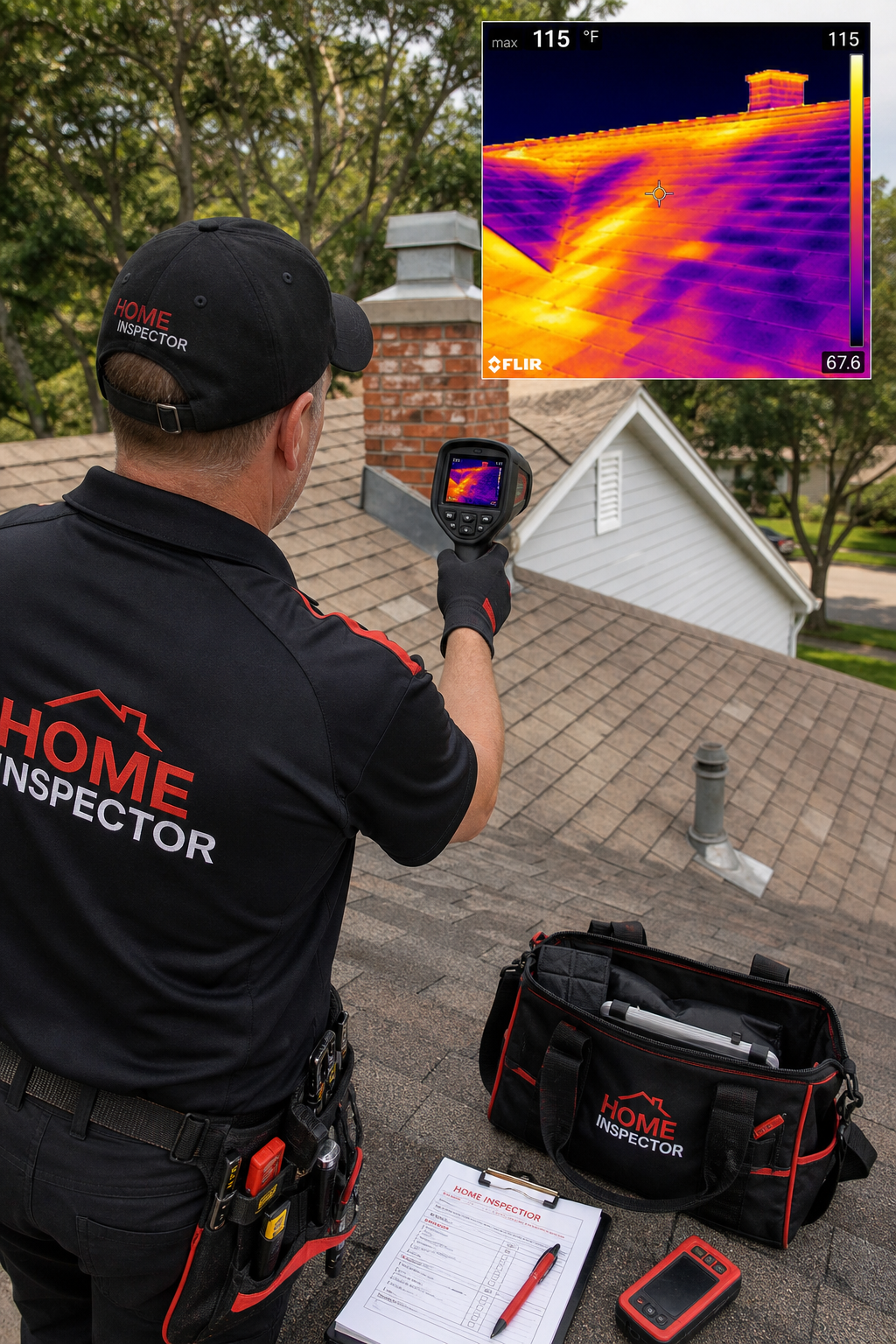
An inspector typically spends two to four hours on a single‑family rental, depending on size and age. They start on the roof, then move inside to check the attic, walls, windows, and doors. Next they test the HVAC, run water through the plumbing, and flip every circuit breaker to see if the electrical panel holds up.
After the walk‑through, the inspector writes a report within 24‑48 hours. The report lists each issue, rates its severity, and often includes a cost range for repair. For investors, those cost ranges are important for budgeting.
Unlike a home appraisal, the inspection does not assign a market value. It simply tells you the condition of the property. That means you still need a separate appraisal for your DSCR loan, but the inspection helps you decide whether the appraisal makes sense.
Investors should ask the inspector to prioritize items that could affect the loan’s debt‑service coverage ratio (DSCR). For example, a roof that needs a $12,000 replacement could push your monthly debt service higher if you have to finance the repair.
Many lenders require a copy of the inspection report before they give final approval. If the report shows a major defect, the lender may ask for a repair credit or a lower loan‑to‑value ratio.
Because the inspection is an objective look at the property, it protects you from surprise costs that can turn a positive cash‑flow deal into a loss.
Home Inspection Requirements for Real Estate Investors
Investors face a few extra rules that differ from owner‑occupants. First, many lenders require a full‑service inspection that covers the five high‑impact systems. Second, if you’re using a DSCR loan, the lender may set a maximum allowable repair credit , often 2% of the purchase price.
Third, the inspection must be performed by a licensed professional who follows a nationally recognized standard of practice. That standard defines what the inspector must look at and how they report findings.
Fourth, the report must be delivered within the inspection contingency period, usually seven days after the contract is signed. If the seller does not meet that deadline, you can walk away without penalty.
Finally, investors should consider a specialized inspection for things that affect rental income, such as a pest inspection, radon test, or septic system evaluation. Those specialized tests are often not covered in a standard inspection but can be a deal‑breaker for a cash‑flow model.
According to the Consumer Financial Protection Bureau, lenders may require the inspection to verify that the property meets safety and habitability standards before funding a loan.
When you get the report, look for any items marked “impact on closing” , those are the ones that can delay or derail your loan. Items without a cost estimate should still be examined closely because they could hide larger expenses.
Our team at Invest Mortgage can help you interpret the inspection data and match it to the right DSCR loan program. Find investment mortgage options that work with your cash‑flow goals.
Costs of Home Inspection for Investment Properties
The price you pay for an inspection depends on size, age, and location. Industry data shows the average cost sits between $300 and $500 for a single‑family home.
In hot markets like Virginia’s Richmond metro, inspectors may charge the higher end of that range because of demand and local cost of living. Larger homes or properties with special features , such as a pool or a finished basement , add to the price.
Specialized inspections, like radon testing or septic evaluation, can add $100 to $300 each. If you need a roof certification for a loan, expect an extra $150‑$250.
While the inspection fee is an upfront cost, think of it as insurance against a $10,000‑plus repair bill that could eat into your cash flow. A thorough inspection can save you much more than the fee you pay.
When you compare quotes, ask each inspector what’s included. Some will give you a basic report, while others bundle a repair‑cost estimate. The latter is worth the extra $50‑$100 if you plan to negotiate a seller credit.
For a concrete example, a buyer in Henrico County paid $380 for a standard inspection, then $500 for a foundation specialist after the first report flagged minor cracks. The foundation repair cost $18,000, which the seller covered after negotiation.
That example shows why the inspection cost is a small price for risk protection.
Remember that the inspection fee is not part of your closing costs; you pay it directly to the inspector at the time of service.
Worked Example: Home Inspection Impact on a $350,000 Rental Property
Let’s walk through a real‑world scenario. You’re eyeing a single‑family home in Henrico County listed for $350,000. You plan to put 25% down, so your cash outlay is $87,500. The loan amount is $262,500.
You apply for a 30‑year DSCR loan at a 7.5% interest rate. Using a standard loan calculator, the principal and interest payment works out to about $1,836 per month.
Current market rent for a similar home in the area is $2,100 per month. The DSCR ratio is calculated as monthly rent divided by the P&I payment: 2,100 ÷ 1,836 = 1.14. That’s above the typical 1.0 minimum, so the loan looks good on cash‑flow alone.
Now add the inspection. The inspector flags three items that affect closing:
The total estimated repair cost is $22,500. If you ask the seller for a credit, the lender will limit the credit to 2% of the purchase price for an investment loan , that’s $7,000. You can either negotiate a lower purchase price, ask for the seller to fix the roof before closing, or accept the credit and fund the remaining repairs after you take ownership.
Assume the seller agrees to a $7,000 credit. Your new loan amount stays the same, but you now have $7,000 less cash out‑of‑pocket for repairs. You still need $15,500 for the remaining fixes, which you can roll into a short‑term renovation loan or pay out of reserve.
After the repairs, the property’s value rises to roughly $380,000, and rent climbs to $2,300. Your new DSCR becomes 2,300 ÷ 1,836 = 1.25 , an even stronger position.
This example shows how the inspection can shape the deal structure, affect the loan, and ultimately improve your cash‑flow outlook.
Need help crunching the numbers? Explore DSCR loan programs that let you finance repairs as part of the loan.
“A solid inspection report turned a potential loss into a profit‑boosting opportunity for this rental.”
Home Inspection vs Waiving Inspection: Comparison Table
Investors sometimes wonder if skipping the inspection can make an offer more attractive. Below is a side‑by‑side look at the two approaches.
Most investors find the benefits of a full inspection outweigh the modest cost. The ability to negotiate repairs or credits can protect your cash flow and keep the loan under the required DSCR.
Frequently Asked Questions
What should I look for in the inspection report as an investor?
Focus on the five systems that most affect lender risk: roof condition, HVAC age and efficiency, electrical panel capacity, plumbing integrity, and foundation stability. Check the “impact on closing” column for any items that could delay financing. Also look for cost estimates; even a rough range helps you budget repairs or negotiate a seller credit. Finally, note any items that could affect your projected net operating income (NOI), such as a leaky roof that could cause water damage.
Can I use the inspection to get a lower purchase price?
Yes. If the report lists repairs that cost thousands, you can request a price reduction or a seller credit. For DSCR loans, the credit is usually capped at 2% of the purchase price, but a lower price directly improves your loan‑to‑value ratio and can boost your DSCR. Present the report to your agent and let the seller know the specific numbers you need to stay cash‑flow positive.
Do lenders require a specific type of inspector?
Lenders typically require a licensed inspector who follows a recognized standard of practice for home inspections. Some lenders also accept inspectors who are members of a professional trade organization. The key is that the inspector must provide a written report that details the condition of the roof, HVAC, electrical, plumbing, and foundation. Verify the inspector’s credentials before you hire them.
How long does the inspection process take?
The on‑site inspection usually lasts 2‑4 hours for a standard single‑family rental. The report is delivered within 24‑48 hours. If you need specialized tests (septic, radon, pest), those may add an extra day or two. Make sure the inspection window fits within your contract’s contingency period, usually seven days.
What happens if the inspection uncovers major defects?
You have three main options: ask the seller to fix the issues before closing, negotiate a repair credit, or walk away without penalty if the contract includes an inspection contingency. For DSCR loans, a major defect may require a higher down payment or a lower loan‑to‑value ratio, so you’ll need to discuss the impact with your lender.
Is it worth paying for a re‑inspection after repairs?
A re‑inspection typically costs $100‑$300. It’s worth it when you’ve negotiated repairs and want to confirm the work was done correctly. Lenders often require proof that critical repairs were completed before they release the final loan funds, so a re‑inspection can keep the closing on schedule.
Can I waive the inspection to make my offer more competitive?
Waiving the inspection can make an offer stand out in a multiple‑offer scenario, but it also removes a key safety net. If the property has hidden defects, you could face $20,000‑$30,000 in unexpected costs. For investors, the risk usually outweighs the potential advantage, especially when a DSCR loan may require the inspection anyway.
Why Work With Duane Buziak at Invest Mortgage
I’m a solo producer with $51.2 million in independently verified loan volume. I earned the Scotsman Guide Top Originator award in 2025 and 2026, and I was named Virginia Broker of the Year for 2024‑2025. My team shops hundreds of lenders to find the best DSCR rates for investors across VA, FL, TN, and GA.
We don’t just fund deals , we help you , calculate repair credits, and structure a loan that keeps your cash flow positive. Our “Dare to Compare” challenge lets you see how our rates stack up against the market, risk‑free.
Ready to explore DSCR loans or investment property financing? Contact Duane Buziak directly for a free pre‑qualification , no credit pull required. Call or text (804) 212‑8663, email duane@invest.mortgage, or visit invest.mortgage to check today’s investor rates. Available 7 days a week. NMLS #1110647.
Last updated: June 2026 | Duane Buziak, NMLS #1110647
Duane Buziak, Mortgage Maestro | NMLS: 1110647 | Licensed in VA · FL · TN · GA | Scotsman Guide Top Originator 2025 & 2026 | VA Broker of the Year 2024, 2025 | Top 1% | invest.mortgage | duane@invest.mortgage | (804) 212‑8663
Equal Housing Lender. This is not a commitment to lend. Duane Buziak NMLS #1110647. Licensed in Virginia, Florida, Tennessee, and Georgia. DSCR loans are for investment properties only and are not available for primary residences.
- Roof: 20‑year old shingle roof needs replacement. Estimated cost $12,000.
- HVAC: Unit is at the end of its useful life. Estimated repair $4,500.
- Foundation: Minor cracking that may need a specialist. Estimated cost $6,000.