
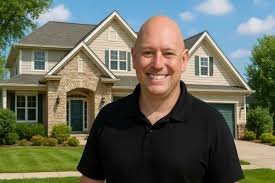
Most homebuyers believe they need 20% down before they can even think about buying a home. That single myth keeps millions of qualified buyers renting longer than necessary, while they chase a savings target that was never the right benchmark for their situation.
Updated October 2026. This year’s housing market makes the best low down payment mortgage programs accessible, but only if you work with someone who can reach them. Mortgage rates are still higher than in the pandemic era, but they are workable. Wholesale pricing through the broker channel often beats what a single-shelf direct lender can quote. As an independent mortgage broker with access to 500+ wholesale lenders, I compare every program you qualify for at the same time. A direct lender can only show you what it carries in-house, and it usually needs a hard credit pull before you see a single option.
Here is what stands out in 2026:
- VA loans down to 500 FICO. Veterans can access VA loans through certain wholesale lenders down to 500 FICO. Most retail direct lenders don’t offer this.
- Dynamo DPA and Turbo DPA. Both wholesale down payment assistance programs are confirmed available in Virginia. For eligible buyers, they can bring costs to little to nothing out of pocket at closing. Results depend on eligibility and program availability.
- 1,400+ five-star reviews. Our reviews come from borrowers across Virginia, Florida, Tennessee, and Georgia. I’m also a two-time VA Broker of the Year (2024–2025) and a Scotsman Guide Top Originator.
Depending on your service history, income type, property location, and credit profile, you may qualify with zero down, 3% down, or little to nothing out of pocket at closing once assistance programs are layered in correctly. The key word is correctly.
This guide covers seven options in plain language: VA loans (zero down), USDA loans (zero down in eligible areas), FHA loans (3.5% down with flexible credit), Conventional 97 (3% down for stronger credit), down payment assistance including Dynamo and Turbo DPA, DSCR loans for investors, and why the broker channel is itself a strategy.
Start with a soft credit pull mortgage review. It means no hard inquiry, no commitment, and no obligation. A soft pull pre-qualification shows you what you qualify for before you apply. You may be looking for a no credit hit mortgage pre-approval, a soft pull mortgage consultation, or a mortgage pre-approval without a hard pull. Any of them protects your credit score while you compare options. I’m licensed in Virginia, Florida, Tennessee, and Georgia, and the process is fast, simple, and stress-free.
By Duane Buziak, NMLS #1110647 | Coast2Coast Mortgage LLC, NMLS #376205 | 804-212-8663
1. VA Loan — Zero Down for Those Who Served
The Challenge It Solves
Saving a down payment is one of the biggest barriers to homeownership, and it should not be a barrier at all for veterans, active-duty service members, and surviving spouses who have already given so much. The VA loan exists specifically to remove that barrier, and it does so without requiring private mortgage insurance on top of it.
The Strategy Explained
The VA loan program requires no down payment for eligible borrowers, charges no PMI, and typically delivers competitive rates through the wholesale broker channel. A VA funding fee applies in most cases — currently 2.15% of the loan amount for first-time use with no down payment — but that fee is waived entirely for veterans with a service-connected disability rating. The funding fee can also be financed into the loan rather than paid out of pocket at closing.
When eligibility exists, this program almost always wins the comparison. The combination of zero down, no PMI, and wholesale rate access is difficult to beat.
Implementation Steps
1. Confirm eligibility by obtaining your Certificate of Eligibility (COE) through VA.gov or through a broker who can pull it on your behalf during the pre-approval process.
2. Review your service-connected disability status — if applicable, confirm the funding fee waiver before closing to avoid an unnecessary cost.
3. Request a soft-pull program comparison across multiple VA-approved wholesale investors to ensure you are getting a competitive rate, not just any rate.
Pro Tips
VA loans have no loan limit for eligible borrowers with full entitlement — meaning you can use this program on higher-priced homes without a down payment requirement tied to the purchase price. If you have remaining entitlement from a prior VA loan, a broker can help you understand how to structure a new purchase correctly.
Worked Dollar Example: VA Loan vs. Conventional 5% Down
To illustrate the real cost difference, consider a $350,000 purchase price.
VA Loan scenario: $0 down payment. VA funding fee at 2.15% = $7,525, financed into the loan. Total loan amount: $357,525. At an illustrative 6.5% rate on a 30-year fixed, estimated principal and interest is approximately $2,260 per month. No PMI. Total out-of-pocket at closing: little to nothing beyond prepaid items and closing costs (which can be negotiated with seller concessions).
Conventional 5% down scenario: $17,500 out of pocket at closing. Loan amount: $332,500. At an illustrative 6.75% rate with PMI of approximately $150 per month, estimated total monthly payment: roughly $2,310 per month in principal, interest, and PMI combined.
The VA loan saves $17,500 upfront and costs less per month — even with the funded fee. These figures are illustrative; actual rates vary by market conditions, credit profile, and lender. Contact a broker for a personalized comparison.
2. USDA Loan — Zero Down in Eligible Rural and Suburban Areas
The Challenge It Solves
Many buyers assume USDA loans are only for farms or remote rural properties. That assumption causes them to overlook a zero-down option that covers a surprisingly large share of suburban zip codes across Virginia, Florida, Tennessee, and Georgia. If you have not checked the USDA eligibility map for the area you are considering, you may be leaving a zero-down option on the table.
The Strategy Explained
The USDA Single Family Housing Guaranteed Loan Program offers zero down payment for buyers purchasing in eligible geographic areas. Income limits apply by county, and the property must be the buyer’s primary residence. You can check property eligibility directly on the USDA eligibility map.
USDA loans carry an upfront guarantee fee and an annual fee — check USDA.gov for current rates, as these figures are updated periodically. Through the broker channel, I can compare multiple USDA-approved wholesale investors to find the most competitive rate for your specific county and income situation.
Implementation Steps
1. Check the USDA property eligibility map for the specific address or zip codes you are considering — many suburban areas qualify.
2. Verify your household income against the county-specific income limits published by USDA Rural Development.
3. Work with a broker who has access to multiple USDA-approved wholesale investors, so you are comparing rates rather than accepting a single offer.
Pro Tips
USDA loans require the property to be a primary residence and the buyer to meet income limits — but those limits are often higher than buyers expect, particularly for larger households. A broker can walk you through the calculation before you assume you do not qualify.
3. FHA Loan — Low Down Payment With Flexible Credit Standards
The Challenge It Solves
Not every buyer has a 680+ FICO score or a clean credit history. Life happens — medical bills, a period of unemployment, a divorce. FHA loans are specifically designed to serve buyers who are rebuilding credit or who have limited credit history, offering the most accessible entry point into homeownership for that profile.
The Strategy Explained
According to HUD.gov, FHA loans allow a 3.5% down payment with a 580 or higher FICO score, and a 10% down payment for borrowers with FICO scores between 500 and 579. Mortgage insurance is required: an upfront MIP (mortgage insurance premium) and an annual MIP that is paid monthly. For current MIP rates, always reference HUD’s official mortgage limits and MIP guidance — rates are updated by HUD and should not be assumed static.
FHA loans also have loan limits that vary by county. The broker channel provides access to multiple FHA-approved wholesale investors, which means rate competition rather than a take-it-or-leave-it offer.
Implementation Steps
1. Pull your credit profile with a soft-pull review to understand your current FICO score and which down payment tier applies to your situation.
2. Review current FHA loan limits for your county on HUD.gov to confirm the purchase price you are targeting falls within program guidelines.
3. Compare FHA quotes from multiple wholesale investors through a broker — the rate and fee structure can vary meaningfully across investors even on the same FHA product.
Pro Tips
FHA mortgage insurance does not automatically cancel the way conventional PMI does. For buyers who expect their credit and equity to improve, it is worth modeling whether a short-term FHA loan followed by a refinance into conventional makes more financial sense than staying in FHA long-term. If your credit needs work before applying, a step-by-step credit improvement plan can help you qualify for better terms sooner.
Worked Dollar Example: FHA Loan on a $280,000 Purchase
Purchase price: $280,000. Down payment at 3.5%: $9,800. Base loan amount: $270,200.
Upfront MIP: 1.75% of the base loan = $4,729, typically financed into the loan. Total loan amount with financed MIP: $274,929.
Annual MIP: Refer to HUD.gov for the current annual MIP rate applicable to your loan term and LTV — this figure is updated by HUD and should be confirmed at the time of application.
At an illustrative 6.75% rate on a 30-year fixed, estimated principal and interest on $274,929 is approximately $1,783 per month, before the annual MIP component. These figures are illustrative; actual rates and MIP costs depend on current HUD guidelines and market conditions.
4. Conventional 97 and 3% Down Conventional Loans — For Buyers With Stronger Credit
The Challenge It Solves
Buyers with solid credit scores often assume FHA is their only low-down option. It is not. For borrowers with 680+ FICO scores, conventional 3% down programs frequently result in a lower total monthly cost than FHA — particularly because PMI cancels at 20% equity and there is no upfront mortgage insurance premium to finance into the loan.
The Strategy Explained
Fannie Mae HomeReady and Freddie Mac Home Possible both allow 3% down for qualifying buyers. Income limits apply for both programs. Unlike FHA, there is no upfront MIP — which means the loan amount is not inflated by a financed insurance premium from day one. PMI is required until the loan reaches 20% equity, at which point it cancels, reducing the monthly payment automatically.
For buyers who qualify, this structure often results in a lower total cost of borrowing over the life of the loan compared to FHA, particularly when the credit profile is strong enough to attract competitive PMI pricing. Understanding how your credit score affects loan options is essential before choosing between these two paths.
Implementation Steps
1. Confirm your FICO score and debt-to-income ratio through a soft-pull review to determine whether you meet the credit thresholds for HomeReady or Home Possible.
2. Verify income eligibility — both programs have area median income limits that vary by county, which a broker can check against your specific situation.
3. Request a side-by-side comparison of FHA vs. Conventional 97 based on your actual credit profile and purchase price, including a modeled PMI cancellation timeline.
Pro Tips
The FHFA conforming loan limits set the ceiling for conventional loan eligibility. If your purchase price approaches or exceeds the conforming limit for your county, discuss jumbo vs. conventional mortgage options with your broker — Up Lending also offers jumbo mortgage products for higher-balance purchases.
5. Down Payment Assistance Programs — Layering Grants and Second Liens on Top of Low-Down Programs
The Challenge It Solves
For many buyers, the program qualification is not the barrier — the down payment itself is. Even 3% or 3.5% on a $300,000 home means $9,000 to $10,500 out of pocket before closing costs. Down payment assistance programs exist specifically to close that gap, and they are far more widely available than most buyers know.
The Strategy Explained
DPA programs — including state housing finance agency programs and wholesale DPA products such as Dynamo and Turbo DPA, which are confirmed available in Virginia — can be layered on top of FHA or conventional loans. When structured correctly, these programs can bring out-of-pocket costs to little to nothing at closing for eligible buyers.
Virginia Housing (formerly VHDA) offers down payment assistance programs for eligible Virginia buyers. For current program details, visit VirginiaHousing.com. For buyers in Florida, Tennessee, and Georgia, state HFA programs offer similar structures — contact me directly for current availability in your state, as program terms and funding levels change regularly.
Broker independence is critical here. A single-shelf direct lender — including Rocket Mortgage or Movement Mortgage — may not carry DPA products at all, or may carry only one product from their own shelf. A broker with access to 500+ wholesale lenders can compare multiple DPA structures simultaneously.
Implementation Steps
1. Identify whether you are targeting an FHA or conventional base loan, as DPA eligibility and structure vary by the underlying loan type.
2. Request a DPA program review from your broker — this includes checking state HFA programs and wholesale DPA products available for your county and income level.
3. Review the terms of any second lien or grant carefully: some DPA programs are forgivable over time, some are repayable at sale or refinance, and the right structure depends on how long you plan to stay in the home.
Pro Tips
DPA programs often have income limits and purchase price caps. They also move in and out of availability based on funding. Work with a broker who actively tracks which programs are funded and open in your state rather than relying on a static program list.
6. DSCR Loan — Low Down for Real Estate Investors Using Rental Income to Qualify
The Challenge It Solves
Self-employed real estate investors and buyers with complex income structures frequently hit a wall with traditional qualification requirements. W-2 income documentation, debt-to-income calculations that do not account for rental income, and bank underwriting guidelines designed for salaried employees can all block investors who are otherwise financially strong. DSCR loans are built for exactly this situation.
The Strategy Explained
DSCR stands for Debt Service Coverage Ratio. It is calculated as gross monthly rental income divided by monthly PITIA (principal, interest, taxes, insurance, and association dues). A DSCR of 1.0 means the rental income exactly covers the mortgage payment. A DSCR of 1.25 or above is commonly preferred by wholesale investors and signals that the property cash-flows comfortably above its debt obligations.
The key advantage: personal income documentation is not the primary qualification factor. The property qualifies on its own rental economics. This is a Non-QM product, and availability through a broker’s 500+ wholesale lender network is the critical differentiator — wholesale DSCR investors compete on rate, leverage, and qualifying criteria in ways that retail bank products typically do not. Self-employed buyers with complex income may also want to review self-employed mortgage approval requirements to understand how DSCR compares to other Non-QM options.
Minimum down payment for DSCR investment properties is typically 20-25%, which is often the lowest entry point available for non-owner-occupied investment properties, particularly for self-employed or complex-income buyers who cannot document income through traditional channels.
Implementation Steps
1. Identify the target property and obtain a rental income estimate — either from a current lease, a property management company’s market rent analysis, or an appraiser’s rent schedule.
2. Calculate the projected DSCR using the estimated rent divided by the expected PITIA at your target purchase price and loan amount.
3. Work with a broker to compare DSCR products across multiple wholesale investors — rate, down payment requirement, prepayment penalty structure, and minimum DSCR threshold all vary by investor.
Pro Tips
Some DSCR investors allow a DSCR below 1.0 with a larger down payment or higher reserve requirement. If a property’s rental income is slightly below the payment, it is worth asking whether a no-ratio or below-1.0 DSCR product is available rather than walking away from the deal entirely.
7. Broker vs. Direct Lender — Why the Channel You Choose Affects Every Program Above
The Challenge It Solves
You can know every program on this list and still end up in the wrong one — if the person you are working with only has access to a fraction of the market. The mortgage channel you choose determines which programs are even on the table, what rates you are quoted, and whether you can get a mortgage pre-approval without a hard pull before committing to a full application.
The Strategy Explained
A mortgage broker operates independently, submitting your loan to wholesale lenders who compete for your business. That means VA, USDA, FHA, Conventional 97, DPA, DSCR, jumbo, and Non-QM products can all be compared simultaneously — with a single soft-pull review of your credit profile.
Rocket Mortgage and Movement Mortgage are direct lenders. They originate and fund loans from their own product shelf. To see your options, both require a full application and a hard credit pull. You are also limited to what they carry — if they do not offer a specific DPA product or a particular DSCR structure, that option simply does not exist in your conversation with them.
Working with Up Lending means you get access to 500+ wholesale lenders, every program type covered in this article, and the ability to compare options with a soft credit pull mortgage review before you commit to anything. Buyers evaluating their choices can also explore the key differences between a mortgage broker and bank direct lending before deciding which path to take.
Implementation Steps
1. Before starting any formal application, request a soft-pull program comparison from a broker. This gives you a full picture of what you qualify for without affecting your credit score.
2. Ask specifically whether the broker has access to DPA products, DSCR investors, and Non-QM options — not every broker does, and the breadth of the wholesale network matters.
3. Compare the total cost of borrowing across program options — not just the interest rate, but the down payment required, the mortgage insurance structure, the funding fee, and the monthly payment — before making a decision.
Pro Tips
The CFPB’s homebuying guidance recommends shopping multiple lenders before committing. A broker does that shopping for you across a wholesale network, which is structurally more efficient than applying to multiple direct lenders individually — each of which would require its own hard pull.
Broker vs. Direct Lender Comparison
Program Access: Up Lending (broker) — VA, USDA, FHA, Conventional, DPA, DSCR, Jumbo, Non-QM, and more across 500+ wholesale lenders | Rocket Mortgage — single-shelf product set | Movement Mortgage — single-shelf product set
Credit Pull to See Options: Up Lending — soft pull available, no hard inquiry required to compare programs | Rocket Mortgage — full application and hard pull required | Movement Mortgage — full application and hard pull required
Down Payment Assistance Products: Up Lending — multiple DPA products available including Dynamo/Turbo DPA (Virginia confirmed) | Rocket Mortgage — limited to own shelf | Movement Mortgage — limited to own shelf
DSCR / Non-QM Access: Up Lending — available through wholesale Non-QM investors | Rocket Mortgage — not a primary product focus | Movement Mortgage — not a primary product focus
Rate Competition: Up Lending — wholesale investors compete for your loan | Rocket Mortgage — internal pricing | Movement Mortgage — internal pricing
Licensing (Up Lending): Virginia, Florida, Tennessee, and Georgia
Your Implementation Roadmap
The decision framework is straightforward once you know the variables. Start here: if you are a veteran, active-duty service member, or surviving spouse, VA is almost always the first program to evaluate. If the property you are targeting is in a USDA-eligible area and your income qualifies, USDA is your zero-down alternative. If your credit needs flexibility, FHA gives you the most accessible path. If your FICO is 680 or above and you can put 3% down, Conventional 97 often delivers a lower total cost. If the down payment itself is the barrier, DPA programs layered on top of FHA or conventional can bring your out-of-pocket costs to little to nothing at closing. If you are an investor buying a non-owner-occupied property with rental income, DSCR is your entry point.
In every case, the broker channel gives you the widest view of the market with the least friction. I can run a side-by-side comparison across all programs you qualify for — with a soft credit pull mortgage review, no hard inquiry, and no commitment required to see your options.
Ready to find out which program fits your situation? Call 804-212-8663 or Connect with our trusted mortgage experts today to start a no hard inquiry mortgage pre-approval online. I am a licensed mortgage broker in Virginia, Florida, Tennessee, and Georgia, and the process is built to be fast, simple, and stress-free from the first conversation.
2026 Housing Market Update: Rates, DPA Programs, and What’s Changed for Buyers
The housing market in 2026 presents a specific set of conditions that affect which low-down-payment program makes the most sense for your situation. Here’s what’s changed — and how to use it.
Mortgage Rates in 2026: What Buyers Are Navigating
Mortgage rates remain elevated relative to the 2020–2021 era, but they are historically moderate and workable for buyers who position their applications correctly. The key variable in a higher-rate environment is the difference between retail and wholesale pricing. A single-shelf direct lender quotes its own rate. A broker with access to 500+ wholesale lenders runs your profile against a live, competitive market — and on any given day, the best wholesale investor for your specific loan type, credit score, and LTV combination may be pricing meaningfully better than the retail average. That spread matters more when rates are elevated.
For buyers still waiting for rates to drop before purchasing: the gap between where rates are and where they were is unlikely to close quickly. Trying to time the market means competing against the same demand when rates do fall — often into a market with fewer homes and higher prices. The smarter move is a soft pull mortgage pre-qualification now so you know exactly where you stand and can move quickly when the right property appears.
VA Loans: The Best Rate in the Market — Down to 500 FICO
VA loans consistently deliver the most competitive rates among the programs covered in this guide, thanks to the government guarantee that reduces investor risk in the wholesale market. For eligible veterans, active-duty service members, and surviving spouses, the 2026 rate environment reinforces what was already true: VA is almost always the right starting point.
The 2026 update that changes outcomes for veterans with credit challenges: some wholesale VA lenders accessible through Up Lending will approve VA loans down to 500 FICO. Most retail lenders and even many mortgage brokers won’t tell you this exists — because they don’t have access to it. Single-shelf lenders impose their own credit overlays, and those overlays often start at 620 or 640. In the wholesale channel, lenders compete for volume and some specifically price for VA borrowers in the 500–580 FICO range. A veteran who has been told no elsewhere should start with a no credit hit mortgage application at Up Lending before accepting that answer.
Dynamo DPA and Turbo DPA: Wholesale Assistance Programs in 2026
The two wholesale DPA products highlighted in this guide — Dynamo DPA and Turbo DPA — remain confirmed available in Virginia through Up Lending as of 2026. Both are designed to layer on top of FHA or conventional base loans and bring out-of-pocket costs at closing to little to nothing for eligible buyers.
These products are not available at retail lenders. They exist in the wholesale channel specifically because broker independence — the ability to shop across 500+ lenders simultaneously — is what creates access to them. When a single-shelf lender tells you DPA programs aren’t available in your situation, that answer reflects the limits of their shelf. When you work with a broker who has wholesale DPA access, the picture changes.
DPA program availability and funding levels do shift throughout the year. Work with a broker who actively monitors which programs are funded and currently accepting applications in your state, rather than relying on a static program list. For Virginia buyers specifically, Virginia Housing (VHDA) programs remain available alongside wholesale DPA products — the best outcome often comes from layering state and wholesale assistance together.
The 1,400+ Five-Star Standard: Why Track Record Matters in 2026
In a market where program selection, rate negotiation, and DPA structuring all carry real dollar consequences, the person helping you navigate matters as much as the programs themselves. Duane Buziak and the Up Lending team have earned more than 1,400 five-star reviews from borrowers across Virginia, Florida, Tennessee, and Georgia — a track record built on matching buyers to the right program from a 500+ lender wholesale network, not just presenting whatever happens to be on a single shelf.
Scotsman Guide Top Originator recognition in both 2025 and 2026, VA Broker of the Year for 2024 and 2025, and over $95.6M in solo production demonstrate the depth of experience behind every recommendation. Start with a soft credit pull mortgage review — no hard inquiry, no commitment — to see which programs apply to your situation right now. Call 804-212-8663 or visit uplending.com.
Frequently Asked Questions
What is the lowest down payment for a conventional loan?
The lowest down payment for a conventional loan is 3%, available through Fannie Mae HomeReady and Freddie Mac Home Possible programs. Both programs have income limits that vary by county. Buyers with stronger credit profiles — generally 680 FICO or above — typically qualify for the most competitive PMI rates at this down payment level.
Can I buy a home with zero down payment?
Yes. Two primary programs offer zero down payment: the VA loan, available to eligible veterans, active-duty service members, and surviving spouses, and the USDA Guaranteed Loan, available for properties in eligible rural and suburban geographic areas with qualifying household income. Both programs are available through the broker channel with rate comparison across multiple wholesale investors.
What credit score do I need for a 3% down mortgage?
For Fannie Mae HomeReady and Freddie Mac Home Possible conventional programs, a minimum 620 FICO score is generally required, though better pricing is available at 680 and above. For FHA at 3.5% down, the minimum is 580 FICO. For buyers with scores between 500 and 579, FHA allows 10% down. A broker can help you identify which program delivers the best total cost for your specific credit profile.
What is the difference between FHA and USDA loans?
FHA loans require a 3.5% down payment (at 580+ FICO) and are available for properties in most locations, including urban and suburban areas. USDA loans require zero down payment but are restricted to USDA-eligible geographic areas and have household income limits. FHA is the more flexible option for credit; USDA is the stronger option for buyers in eligible areas who want to avoid a down payment entirely.
Do VA loans really require no down payment?
Yes. According to VA.gov, eligible veterans, active-duty service members, and surviving spouses can purchase a home with no down payment required. No private mortgage insurance is required. A VA funding fee applies in most cases but is waived for veterans with a service-connected disability rating and can be financed into the loan for those who do pay it.
What is a DSCR loan and how much down payment does it require?
A DSCR loan (Debt Service Coverage Ratio loan) is a Non-QM mortgage that qualifies the borrower based on the investment property’s rental income rather than personal income documentation. It is designed for real estate investors and self-employed buyers with complex income. The minimum down payment is typically 20-25% for non-owner-occupied investment properties. Access to multiple wholesale DSCR investors through a broker is the key advantage for rate and terms comparison.
Can I combine a down payment assistance grant with an FHA loan?
Yes. Down payment assistance programs — including state HFA programs and wholesale DPA products like Dynamo and Turbo DPA — can be layered on top of FHA loans. When structured correctly, this combination can bring out-of-pocket costs to little to nothing at closing for eligible buyers. Virginia Housing offers DPA programs for eligible Virginia buyers at VirginiaHousing.com. Availability in Florida, Tennessee, and Georgia varies by program and funding status — contact a broker for current options in your state.
How do I get pre-approved for a mortgage without a hard credit pull?
Work with a mortgage broker who offers a soft-pull program review. At Up Lending, I can review your credit profile, identify which programs you qualify for, and provide a program comparison — all without triggering a hard inquiry on your credit report. A hard pull is only initiated when you are ready to move forward with a formal application. Call 804-212-8663 or visit uplending.com to start the process.
About the Author
Duane Buziak, NMLS #1110647, is a licensed mortgage broker with Coast2Coast Mortgage LLC (NMLS #376205), licensed in Virginia, Florida, Tennessee, and Georgia. Ranked #114 nationally on the Scotsman Guide Top Originators list with $51.2M in production, named VA Broker of the Year 2024-2025, and recognized as a UWM PRO ELITE broker in 2025, Duane has built a solo production record of $95.6M and more than 1,400 five-star reviews from clients across all four licensed states. His approach centers on broker independence: matching each buyer to the right program from a network of 500+ wholesale lenders, with a process designed to be fast, simple, and stress-free.
Phone: 804-212-8663 | Website: uplending.com