
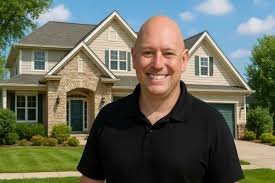
You’ve found the neighborhood. You’ve run the numbers on monthly payments. And then the down payment figure stops you cold. If you cannot afford a down payment on a house right now, you are not alone. In the 2026 housing market, you are far from out of options.
Updated October 2026. The myth that homeownership requires 20% down has kept countless qualified buyers renting longer than necessary. Today’s rates are above the 2020–2021 lows but workable, and wholesale pricing through the broker channel keeps costs competitive. I’m a mortgage broker licensed in Virginia, Florida, Tennessee, and Georgia with access to 500+ wholesale lenders. Every week I work with buyers who start convinced they can’t afford to buy. Months later they close with little to nothing out of pocket at closing. Our 1,400+ five-star reviews tell that story directly.
This guide covers seven strategies, with real numbers and real program names. That includes the Dynamo DPA and Turbo DPA wholesale programs available in Virginia. It also compares an independent broker with a single-shelf direct lender. If you’re a veteran, certain wholesale lenders offer VA loans down to 500 FICO. If you’re a first-time buyer or rebuilding after a setback, at least one of these paths should fit.
You can start today with a soft credit pull mortgage pre-approval. That means no hard inquiry and no commitment, just clarity on where you stand. Other names for the same step are a soft pull pre-qualification, a no hard inquiry mortgage pre-approval, and a no credit hit mortgage application. With inventory still tight in many markets, being pre-qualified gives you a real competitive edge. Let’s get into it.
By Duane Buziak, NMLS #1110647 | Coast2Coast Mortgage LLC, NMLS #376205 | Licensed in Virginia, Florida, Tennessee, and Georgia | VA Broker of the Year 2024 & 2025
1. VA Loans: The Only True Zero-Down Option for Eligible Veterans
The Challenge It Solves
If you’ve served, the down payment barrier shouldn’t exist — and with a VA loan, it doesn’t. Many veterans don’t realize their benefit eliminates the down payment entirely and removes the PMI requirement that adds hundreds of dollars per month to conventional loans. The VA loan is the single most powerful homebuying tool available, and it’s underutilized because too few buyers know exactly how it works in dollar terms.
The Strategy Explained
The VA Purchase Loan program requires no down payment for eligible veterans, active-duty service members, and surviving spouses. There is no private mortgage insurance requirement — ever. The trade-off is a VA funding fee, which for a first-time use with no down payment is 2.15% of the loan amount as of the current VA fee schedule. Critically, that fee can be financed into the loan rather than paid upfront, meaning your cash-to-close can remain very low.
Here’s what that looks like on a real purchase:
Purchase price: $350,000
Down payment: $0
VA funding fee (2.15% × $350,000): $7,525 — financed into the loan
Total loan amount with financed fee: $357,525
Estimated P&I at 6.75%, 30-year term: approximately $2,318/month (confirm with a current mortgage calculator at time of application)
PMI: $0/month
Compare that to a conventional loan on the same $350,000 purchase at 5% down: you’d need $17,500 cash upfront, plus PMI of roughly $150 to $200 per month until you reach 80% LTV. The VA loan saves you the down payment entirely and eliminates that monthly PMI line item for the life of the loan. For a deeper look at VA loan benefits for veterans, including how the assumability feature works in today’s rate environment, that guide covers the full picture.
Review the full VA funding fee schedule to confirm your exact fee based on use history and service type.
Implementation Steps
1. Obtain your Certificate of Eligibility (COE) through VA.gov or ask your broker to pull it on your behalf — it takes minutes in most cases.
2. Start a no hard inquiry mortgage pre-approval with a soft pull so you know your rate range before committing to a full application.
3. Work with a broker who has access to multiple VA wholesale lenders — FICO floors vary by investor, and some wholesale lenders go as low as 500 FICO, giving you options retail counters don’t carry.
Pro Tips
If you have a service-connected disability rating, your VA funding fee may be waived entirely — confirm this with your lender before closing. Also, VA loans are assumable, which is a significant selling advantage in a higher-rate environment. Don’t overlook that when evaluating long-term value.
2. USDA Loans: 100% Financing Beyond the Farm
The Challenge It Solves
Most buyers assume USDA loans are for farmland. They’re not. The USDA’s Guaranteed Loan Program covers a surprisingly wide swath of suburban communities — including many neighborhoods within commuting distance of major metro areas in Virginia, Florida, Tennessee, and Georgia. If you’re buying outside a dense urban core, there’s a real chance your target property qualifies, and that means zero down payment required.
The Strategy Explained
The USDA Single Family Housing Guaranteed Loan Program offers 100% financing on eligible properties for buyers who meet income limits. Income limits vary by county and household size — check the USDA’s income limit tool for your specific area before assuming you don’t qualify.
Instead of PMI, USDA loans carry a guarantee fee structure: a 1.0% upfront guarantee fee (which can be financed into the loan) and an annual fee of 0.35% of the outstanding loan balance. On a $250,000 loan, that annual fee works out to roughly $875/year, or about $73/month — meaningfully lower than FHA’s annual MIP on a comparable loan. Verify the current fee schedule directly with USDA RD at time of application, as these figures are subject to change.
The first step is the USDA property eligibility map. Enter any address and you’ll know within seconds whether the home qualifies. Many buyers are surprised to find suburban neighborhoods in the outer rings of Richmond, Tampa, Nashville, and Atlanta fall within eligible zones — the USDA loan Florida eligibility guide walks through exactly which areas qualify and what the income limits look like county by county.
Implementation Steps
1. Check the USDA property eligibility map for your target address before falling in love with a specific home.
2. Confirm your household income against the county-specific USDA income limits — these are based on total household income, not just the borrower’s.
3. Request a mortgage pre-approval without hard pull to understand your rate and loan amount range before shopping.
Pro Tips
USDA loans require the property to be your primary residence and have no maximum purchase price — though your income and debt-to-income ratio will naturally constrain the loan amount. Pairing a USDA loan with seller concessions can cover most or all of your closing costs, getting you to the table with little to nothing out of pocket.
3. FHA Loans Paired With Down Payment Assistance
The Challenge It Solves
FHA’s 3.5% minimum down payment is the most accessible entry point for buyers without significant savings — but even 3.5% can feel like a wall when you’re starting from zero. The solution most buyers don’t know about: down payment assistance programs designed specifically to cover that 3.5%, bringing your actual cash requirement to little to nothing out of pocket at closing.
The Strategy Explained
Under HUD’s FHA guidelines, 100% of the required down payment can come from gift funds or approved assistance programs. DPA programs like Dynamo and Turbo — available in Virginia — are structured to layer on top of FHA loans and cover the 3.5% requirement entirely. DPA products come in three structures you need to understand:
Grant: Funds that never need to be repaid. Cleanest option, but often carries a slightly higher rate.
Forgivable second mortgage: A second lien that is forgiven after a set period (typically 3 to 5 years) if you remain in the home. No repayment required if you stay.
Repayable second mortgage: A second lien at a low or zero interest rate that must be repaid when you sell or refinance. Increases your total debt but preserves a lower first mortgage rate.
Here’s a worked example on a $275,000 purchase:
Purchase price: $275,000
FHA minimum down payment (3.5%): $9,625
DPA grant or forgivable second covering 3.5%: $9,625 — out-of-pocket down payment: $0
Estimated closing costs: $5,500 to $7,500
Seller concession negotiated into contract: $5,500 — closing costs largely covered
FHA upfront MIP (1.75% of loan): $4,812.50 — financed into the loan
Net cash to close: Potentially very little to nothing out of pocket
Confirm current FHA annual MIP rates from the HUD Mortgagee Letter and verify the most current guidance at time of application. Understanding the full FHA loan credit score requirements before you apply will help you determine which tier you fall into and what your minimum down payment will actually be.
Implementation Steps
1. Confirm your FICO score — FHA requires 580+ for the 3.5% down tier. Below 580, the minimum rises to 10%.
2. Ask your broker specifically about Dynamo, Turbo, and other wholesale DPA products layered on FHA — these are not available at every retail counter.
3. Negotiate seller concessions into the purchase offer to cover remaining closing costs. FHA allows sellers to contribute up to 6% of the sales price toward closing costs.
Pro Tips
One important caveat on FHA: mortgage insurance is permanent for loans originated after June 2013 with less than 10% down. If you put 3.5% down, you’ll carry FHA MIP for the life of the loan unless you refinance into a conventional loan once you reach sufficient equity. Factor that into your long-term cost analysis.
4. Conventional 97 and 3%-Down Programs
The Challenge It Solves
Many buyers assume conventional loans require 10% or 20% down. That assumption is costing them. Fannie Mae’s HomeReady and Freddie Mac’s Home Possible programs both require just 3% down — and unlike FHA, the mortgage insurance on these loans is cancellable once you reach 80% LTV. That distinction matters enormously over a 30-year loan.
The Strategy Explained
Fannie Mae HomeReady and Freddie Mac Home Possible both offer 3% down conventional financing with income restrictions generally tied to 80% of area median income. If you’re above that income threshold, the standard Conventional 97 product (no income limit) is also available at 3% down for first-time buyers.
The PMI comparison with FHA is where conventional loans often win in the long run. Per the CFPB, PMI on a conventional loan must be cancelled when your loan reaches 80% of the original value — you can also request cancellation proactively when you hit that threshold. FHA MIP on a loan with less than 10% down stays for the life of the loan. Over a 30-year term, that difference can represent tens of thousands of dollars.
A broker with access to multiple wholesale lenders can also shop PMI rates across carriers — something a single-shelf direct lender cannot do. PMI rates vary by carrier, and the difference between the highest and lowest quote on the same loan profile can be $50 to $100 per month. If you’re weighing how much to put down to avoid or minimize PMI, the down payment requirements guide breaks down the thresholds by loan type with real numbers.
Implementation Steps
1. Determine whether your income falls within HomeReady or Home Possible limits for your county — your broker can run this in minutes.
2. Compare the all-in monthly cost of 3%-down conventional with PMI against FHA with MIP over a 5-year horizon, accounting for PMI cancellability.
3. Ask your broker to shop PMI rates across multiple carriers — this is a lever that only an independent broker can pull.
Pro Tips
HomeReady allows non-borrower household income to be considered for qualifying purposes, which can help buyers in multi-generational households. It also permits boarder income (rental income from a room in the home) to count toward qualification — a feature most buyers don’t know exists.
5. State, County, and Employer Down Payment Assistance Programs
The Challenge It Solves
Federal programs get most of the attention, but state housing finance agencies and county-level programs often carry the most generous assistance — and they’re frequently underutilized because buyers simply don’t know they exist. If you’re buying in Virginia, Florida, Tennessee, or Georgia, there are dedicated programs with funded pools specifically designed to reduce or eliminate your down payment requirement.
The Strategy Explained
Each state in our licensed footprint operates its own housing finance agency with DPA products:
Virginia Housing (formerly VHDA): Offers down payment assistance grants and second mortgages for eligible buyers. Details at virginiahousing.com.
Florida Housing Finance Corporation: Provides multiple DPA programs including the Florida Assist second mortgage program. Details at floridahousing.org.
Tennessee Housing Development Agency (THDA): Offers the Great Choice Home Loan with DPA options. Details at thda.org.
Georgia Department of Community Affairs (DCA): Administers the Georgia Dream program with down payment assistance. Details at dca.ga.gov.
Beyond state agencies, county-level grants, employer-sponsored homebuying benefits, and nonprofit assistance programs can be stacked on top of state programs in many cases. The key word is stacking: combining a state DPA second mortgage with a seller concession and a lender credit can bring your cash-to-close to near zero on the right transaction. For Florida buyers specifically, the proven strategies for Florida DPA programs guide covers which products are currently funded and how to stack them effectively.
Forgivable DPA programs typically require you to remain in the home for a set period — commonly 3, 5, or 10 years — before the assistance converts to a grant. Selling or refinancing before that window closes usually triggers repayment of the outstanding balance.
Implementation Steps
1. Visit your state housing finance agency website and review current DPA program availability, funding status, and income limits — these programs sometimes exhaust funding mid-year.
2. Ask your broker specifically about wholesale DPA products that layer on top of state programs — some products are only accessible through the wholesale channel.
3. Check with your employer’s HR department about homebuying assistance benefits — some large employers and government agencies offer forgivable grants or matching programs.
Pro Tips
DPA program availability and funding can change quickly. A broker who works with these programs daily will know which pools are currently funded and which have been exhausted — that real-time intelligence is worth more than any static resource list. The CFPB’s homebuyer assistance tool is also a useful starting point for identifying programs in your area.
6. Gift Funds, Seller Concessions, and Lender Credits
The Challenge It Solves
Even when a loan program handles the down payment, closing costs can still represent a surprise cash requirement of several thousand dollars. Three tools — gift funds, seller concessions, and lender credits — exist specifically to address this gap, and most buyers either don’t know about them or don’t know how to combine them effectively.
The Strategy Explained
Gift Funds: Under Fannie Mae’s Selling Guide, gift funds from eligible donors (family members or close associates) can cover 100% of the down payment and closing costs on many loan types, including FHA and conventional. The donor must provide a signed gift letter confirming no repayment is expected, and the transfer must be documented. FHA allows 100% of the required down payment to come from gift funds — confirmed by HUD guidelines. Review current IRS gift tax rules at IRS.gov to understand annual exclusion amounts for the donor.
Seller Concessions: A seller can contribute toward your closing costs as part of the purchase contract negotiation. Contribution limits by loan type: FHA allows up to 6% of the sales price; VA allows up to 4% of the appraised value; conventional loans allow 3% at LTV above 90%, 6% at LTV between 75.01% and 90%, and 9% at LTV at or below 75%, per the Fannie Mae Selling Guide. In a buyer’s market or with motivated sellers, negotiating concessions into the offer is a straightforward way to reduce cash needed at closing.
Lender Credits: A lender credit is a trade: you accept a slightly higher interest rate in exchange for a credit that offsets closing costs. This is not the same as “no closing costs” — the costs are real, they’re just built into the rate. Used strategically, a lender credit can bridge the gap between seller concessions and your total closing cost requirement, getting you to the table with little to nothing out of pocket. A full mortgage closing costs breakdown will show you exactly which line items are negotiable and which are fixed, so you know where seller concessions and lender credits have the most impact.
Implementation Steps
1. If using gift funds, start the paper trail early — lenders need to document the transfer, and last-minute fund movements can delay closing.
2. Work with your real estate agent to negotiate seller concessions into the initial offer rather than as a late-stage request — sellers are more receptive when it’s part of the original deal structure.
3. Ask your broker to model the lender credit scenario alongside the par rate scenario so you can compare total cost over your expected hold period.
Pro Tips
These three tools are most powerful when combined. A gift fund covering the down payment, seller concessions covering most of the closing costs, and a modest lender credit filling the remaining gap can produce a closing where your out-of-pocket requirement is minimal. The math works — you just need a broker who knows how to structure it.
7. Broker vs. Direct Lender: Why Your Down Payment Options Depend on Who You Call
The Challenge It Solves
Here’s a reality most buyers don’t discover until it’s too late: the range of programs available to you depends entirely on who you call first. A single-shelf direct lender can only offer what they carry in-house. An independent broker with access to 500+ wholesale lenders shops the full market — including DPA products, rate structures, and FICO-flexible programs that the retail channel simply doesn’t carry.
The Strategy Explained
The difference isn’t just about rate. It’s about access. When you call a direct lender like Rocket Mortgage or Movement Mortgage, you get their product shelf — their DPA programs, their PMI carriers, their overlays. When you work with an independent broker, that broker shops across hundreds of wholesale lenders simultaneously, accessing programs that were negotiated specifically for the wholesale channel and are not available at the retail counter. The mortgage broker vs. bank direct lending comparison breaks down exactly how these two models differ in program access, pricing, and flexibility for buyers trying to minimize their upfront costs.
The process difference matters too. Many direct lenders require a full application and hard credit pull before they’ll show you options. A soft pull mortgage broker approach — which is how I work — means you get a clear picture of your options before anything hits your credit report. That’s a meaningful difference when you’re still in the exploration phase.
Here’s a direct comparison:
Broker vs. Direct Lender — Down Payment Program Access
Feature | Independent Broker (Up Lending) | Direct Lender (e.g., Rocket, Movement)
Lender access: 500+ wholesale lenders | Single shelf (their products only)
DPA program access: Wholesale DPA products + state programs | In-house DPA only
Credit inquiry to see options: Soft pull — no credit hit mortgage application | Full application + hard pull typically required
PMI shopping: Multiple carriers, broker shops for lowest rate | Single carrier
VA/USDA/FHA overlays: Can access investors with lower FICO floors | Subject to their own overlay requirements
Rate competition: Wholesale pricing across hundreds of investors | Retail pricing on their own products
DPA stacking: Can combine wholesale DPA with state programs | Limited to their own product combinations
The practical impact: a buyer who calls a single-shelf lender and gets told “you don’t qualify” may qualify immediately through a wholesale lender with different overlays. A buyer who gets quoted one DPA product at a retail counter may have access to three or four better-structured options through the wholesale channel. The call you make first shapes the options you see. If you’ve already been turned down, what to do after a mortgage denial explains exactly how to reframe that scenario and find a path forward through the wholesale channel.
Implementation Steps
1. Before submitting any application, ask whether the lender will run a soft pull or a hard pull to show you options — a no credit hit mortgage application is the right starting point.
2. Ask specifically which DPA programs the broker or lender has access to and whether they can access wholesale DPA products in addition to state agency programs.
3. If you’ve been told “no” by a direct lender, bring that scenario to an independent broker before giving up — the answer may be different with access to a broader lender pool.
Pro Tips
Wholesale rates are generally lower than retail rates on equivalent loan products because the broker channel eliminates the retail margin. That rate difference, compounded over 30 years, can represent significant savings — on top of the broader program access. The broker model exists specifically to give buyers the market advantage that used to be available only to insiders.
Your Implementation Roadmap
The path forward depends on your situation, and the decision tree is simpler than you might think.
Are you a veteran, active-duty service member, or surviving spouse? The VA loan is your first call. Zero down, no PMI, and competitive wholesale rates make it the strongest program in the market for eligible buyers. Start with a COE verification and a soft-pull pre-approval.
Are you buying in a suburban or rural area? Check the USDA eligibility map before anything else. If the property qualifies, 100% financing with a lower annual fee structure than FHA is available — and most buyers in outer suburban markets are surprised to find they’re in an eligible zone.
Everyone else: FHA paired with down payment assistance is the most common path to getting into a home with little to nothing out of pocket at closing. Add seller concessions and, where needed, a lender credit, and the cash-to-close gap closes faster than most buyers expect.
The single most important step you can take right now is a mortgage pre-approval without hard pull — a soft credit pull that shows you exactly where you stand without affecting your credit score. From there, the right program becomes clear, and the timeline to ownership becomes real.
I’m Duane Buziak, NMLS #1110647, a mortgage broker licensed in Virginia, Florida, Tennessee, and Georgia with access to 500+ wholesale lenders. Call 804-212-8663 or connect with our trusted mortgage experts today to start your soft-pull pre-approval at uplending.com. You’ve been renting long enough — let’s find your path to ownership.
Frequently Asked Questions
Q: Can I really buy a house with no down payment?
Yes, through two federal programs: VA loans for eligible veterans and service members, and USDA loans for properties in eligible rural and suburban areas. Both require zero down payment. Outside those programs, down payment assistance can cover the required minimum on FHA and conventional loans, bringing your out-of-pocket cash to little to nothing at closing.
Q: What credit score do I need to qualify for a zero-down or low-down mortgage?
It depends on the program. FHA requires a minimum 580 FICO for the 3.5% down tier. USDA and VA don’t set a federal minimum, but individual wholesale lenders set their own floors — some VA wholesale investors go as low as 500 FICO. Conventional 97 programs generally require 620+. A broker with access to multiple wholesale lenders can match your credit profile to the investor with the best available terms.
Q: What is a soft credit pull, and why does it matter?
A soft credit pull lets a broker review your credit profile and estimate your loan options without generating a hard inquiry on your credit report. Hard inquiries can lower your score by a few points and are visible to other lenders. A soft pull mortgage approach means you can explore your options with full information before committing to an application — no credit hit, no commitment.
Q: How do down payment assistance programs work, and do I have to pay them back?
DPA programs come in three structures: grants (never repaid), forgivable second mortgages (forgiven after a set period, typically 3 to 10 years, if you stay in the home), and repayable second mortgages (low or zero interest, repaid when you sell or refinance). The right structure depends on how long you plan to stay in the home and which programs are available in your area.
Q: Can seller concessions really cover my closing costs?
Yes, within program limits. FHA allows sellers to contribute up to 6% of the sales price toward closing costs. VA allows up to 4% of the appraised value. Conventional loans allow between 3% and 9% depending on your LTV. In many transactions, seller concessions combined with a DPA grant and a lender credit can bring the buyer’s cash-to-close to very little or nothing out of pocket.
Q: What is the VA funding fee, and can it be waived?
The VA funding fee is a one-time charge that helps sustain the VA loan program. For a first-time use with no down payment, it’s 2.15% of the loan amount under the current fee schedule — and it can be financed into the loan. Veterans with a service-connected disability rating may be exempt from the funding fee entirely. Confirm your exemption status before closing.
Q: Why should I use a broker instead of going directly to a lender?
An independent broker with access to 500+ wholesale lenders shops the full market on your behalf — including DPA products, rate structures, and programs that single-shelf direct lenders don’t carry. Brokers can also start with a soft credit pull rather than requiring a full application and hard inquiry upfront. For buyers trying to maximize program access and minimize out-of-pocket costs, the broker model provides a structural advantage.
Q: How long does it take to get pre-approved and close on a home using these programs?
A soft-pull pre-approval can typically be completed within one business day. Full underwriting timelines vary by program: conventional and FHA loans often close in 21 to 30 days; VA and USDA loans can take 30 to 45 days due to additional program requirements. DPA programs may add a few days depending on the product. Starting the process early — before you’ve found a specific home — gives you the most flexibility.
About the Author
Duane Buziak, NMLS #1110647, is a mortgage broker with Coast2Coast Mortgage LLC (NMLS #376205), licensed in Virginia, Florida, Tennessee, and Georgia. Ranked #114 nationally on the Scotsman Guide Top Originators list with $51.2M in funded volume, named VA Broker of the Year for 2024 and 2025, and recognized as a UWM PRO ELITE broker in 2025. Duane has closed over $95.6M in solo production and earned 1,400+ five-star reviews from buyers who started the conversation convinced they couldn’t afford to buy — and closed months later.
2026 Market Update: Current Rates, VA to 500 FICO, and DPA Program Availability
The 2026 housing market has some important updates for buyers who cannot afford a down payment — specifically around rate conditions, VA credit floor changes, and the current status of down payment assistance programs. Here’s what’s changed and how it affects your options.
Rate Environment in 2026: Why Waiting Is a Risk
Mortgage rates in 2026 remain above the historic lows of 2020–2021, but they are workable — particularly in the wholesale channel where broker independence and 500+ lender access keeps pricing competitive. The rate environment creates two kinds of buyers: those who wait for the perfect rate and miss homes in the process, and those who get pre-qualified now, understand their number, and move when the right property appears.
The smarter path is the second one. A soft pull mortgage pre-qualification costs nothing, doesn’t touch your credit score, and gives you a real rate range for your specific loan type and profile. In a market where inventory remains tight in most metro areas and prices have not declined meaningfully, waiting for a rate drop that may arrive alongside more competition and higher prices is not a guaranteed win. Get your number now with a soft credit pull mortgage review — then you’re ready to act when you find the right home.
VA Loans Down to 500 FICO: The 2026 Update Veterans Need
The most impactful 2026 change for veterans: some wholesale VA lenders in Up Lending’s network now approve VA loans down to 500 FICO. This is a wholesale-channel-only option — it does not exist at single-shelf retail lenders, which typically impose overlays starting at 620 or higher.
What this means practically: a veteran with a 520 FICO who has been turned away by a bank, a credit union, or a direct lender like Rocket or Veterans United may still qualify for a VA loan through a wholesale investor with lower overlay requirements. The VA program’s residual income underwriting model and government guarantee create an environment where some wholesale lenders are willing to serve borrowers that retail pricing models decline.
The only way to know whether you fall into this window is a no hard inquiry mortgage pre-approval that surfaces which specific wholesale investors have favorable overlays for your score range. Starting that conversation costs nothing and changes no answers until you choose to move forward. Call 804-212-8663 or visit uplending.com to find out what’s actually available for your situation.
Dynamo DPA and Turbo DPA: Current Availability in Virginia
Both Dynamo DPA and Turbo DPA remain confirmed available in Virginia through Up Lending as of 2026. These wholesale DPA products layer on top of FHA or conventional base loans and are designed to bring out-of-pocket costs at closing to little to nothing for eligible buyers — covering the required down payment and, when combined with seller concessions, potentially most closing costs as well.
These programs are not available at retail direct lenders. They are wholesale-channel products, accessible specifically because Up Lending operates as an independent broker with access to 500+ wholesale lenders rather than a single product shelf. Buyers in Florida, Tennessee, and Georgia should contact Up Lending directly for current DPA availability in their state, as program terms and funding levels change regularly and require real-time confirmation.
Virginia Housing (VHDA) programs remain available alongside wholesale DPA options in Virginia — and the right structure often involves layering state and wholesale assistance together. A broker who works with both types of programs daily is better positioned to find that combination than a retail lender who only offers their own shelf.
1,400+ Five-Star Reviews: The Up Lending Track Record in 2026
Over 1,400 five-star reviews from borrowers across Virginia, Florida, Tennessee, and Georgia. VA Broker of the Year for 2024 and 2025. Scotsman Guide Top Originator recognition in 2025 and 2026. These aren’t credentials for their own sake — they represent buyers who started conversations convinced they couldn’t afford to own a home and closed months later with little to nothing out of pocket at closing.
Broker independence is the structural reason those outcomes are possible. With access to 500+ wholesale lenders, Duane Buziak and the Up Lending team can find the program that fits your actual situation — not just the program that fits within a single lender’s shelf. That distinction matters most for buyers who don’t have a large down payment, who have credit challenges, or who are navigating complex income situations.
Start with a mortgage pre-approval without hard pull. No commitment, no credit impact, just a clear picture of what you qualify for and what it will take to close. Call 804-212-8663 or visit uplending.com to get started today.