
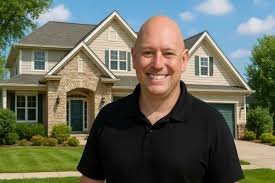
A $285,000 home with a USDA loan can mean a 100% financing option instead of putting down $8,550 to $28,500 on a 3% to 10% down payment loan. At 6.50% on a 30-year fixed, principal and interest on $285,000 is about $1,801 per month. If a comparable conventional option required 5% down, you would bring $14,250 to closing before closing costs. Over five years, keeping that cash on hand can matter more than shaving a small amount off the rate, especially for first-time buyers trying to cover moving costs, repairs, and reserves.
If you’re researching how to buy with USDA, the big idea is simple: this program is designed for eligible buyers purchasing in qualifying rural and many suburban areas, with no down payment required. The details are where deals get won or lost – income limits, property eligibility, monthly payment ratios, and whether the home actually meets USDA standards.
Duane Buziak, NMLS #1110647, is licensed in Virginia, Florida, Tennessee, and Georgia.
Table of Contents
- What USDA actually covers
- Who qualifies to buy with USDA
- How to buy with USDA step by step
- Costs, credit, and payment numbers
- Broker vs. single-shelf institution
- FAQ
- Legal disclaimer
What USDA actually covers
USDA loans are government-backed mortgages for primary residences in eligible areas. That does not mean only farmland or tiny towns. Many places outside urban cores qualify, including areas around Richmond, Chesterfield, and Suffolk depending on the exact address. Parts of Glen Allen may not qualify, while outer sections of Hanover County or communities near Ashland often deserve a second look.
The program most buyers use is the USDA Guaranteed Loan. It allows 100% financing, but there are still costs to plan for. You can expect closing costs often around 2% to 5% of the purchase price, although sellers can sometimes contribute and some borrowers ask about no-out-of-pocket closing options. USDA also charges a guarantee fee structure, including an upfront fee and annual fee that are usually lower than FHA mortgage insurance for many borrowers.
For a national benchmark, the 2026 conforming loan limit in most counties is set by the FHFA. USDA does not use the conforming limit the same way conventional lending does, but it is still a useful reference point when comparing program choices.
Who qualifies to buy with USDA
The first filter is location. The property must be in a USDA-eligible area. The second is household income. USDA looks at total eligible household income, not just the income used to qualify for payment. That is where some buyers get surprised.
Credit matters too, although USDA can be more flexible than many borrowers assume. A 640 score is a common benchmark for streamlined approval, but lower scores can still be possible with stronger compensating factors. Those factors can include lower debt, stable job history, cash reserves, or a payment shock that is still manageable. Reserve requirements are often lighter than jumbo or non-QM loans, and many owner-occupied USDA buyers close without a formal multi-month reserve requirement.
Property use matters. USDA is for a primary home, not a vacation house, not a DSCR rental, and not a fix-and-flip. If your income is unconventional, a broker can also compare USDA against FHA, VA, conventional, bank statement, or non-QM options instead of forcing one program to fit every file.
Local pricing also matters. In Chesterfield County, the median home sale price has recently tracked around the upper $300,000s on major housing portals such as https://www.redfin.com/county/2991/VA/Chesterfield-County/housing-market. That means USDA can be especially useful in nearby lower-priced eligible pockets where buyers want a house payment without draining savings. In many Virginia markets, inventory remains tight in entry-level price bands, so buyers using USDA need clean paperwork and fast preapproval to compete.
How to buy with USDA step by step
If you want to understand how to buy with USDA without wasting time, start with eligibility before house hunting hard. First, confirm the property area is USDA-eligible. Next, review household income against current limits. Then check whether your credit profile and debt-to-income ratio support the payment.
A practical early move is a soft credit pull mortgage review. That lets a broker examine score range, liabilities, and likely loan fit without the same consumer anxiety that comes with a full hard inquiry on day one. If you’re searching terms like no hard inquiry mortgage pre approval, mortgage pre approval without hard pull, soft pull mortgage broker, or no credit hit mortgage application, the key distinction is this: soft-pull prequalification can help you estimate buying power, but a full approval usually requires complete documentation and a hard inquiry before final underwriting.
After prequalification, you shop for homes in eligible areas and write offers that match the property condition standards. USDA appraisals are not just about value. The home must also be safe, sound, and sanitary. A house with peeling paint, a failing roof, missing handrails, or major mechanical issues can create delays.
Once you’re under contract, the file moves through full application, income documentation, asset review, appraisal, underwriting, and USDA final sign-off when required. Expect to document pay stubs, W-2s or tax returns, bank statements, ID, and explanations for any recent credit events. Closing cost ranges commonly land between 2% and 5%, so on a $285,000 purchase, that is roughly $5,700 to $14,250 unless seller credits or pricing structure reduce your cash need.
Costs, credit, and payment numbers that matter
USDA is attractive because the down payment can be zero, but that does not mean every borrower should choose it automatically. If a buyer has strong credit, higher income, and cash for down payment, conventional financing may offer more flexibility on property location and potentially lower long-term fees. For veterans, a VA loan can be even stronger if eligible. FHA may work better when credit is bruised. That is why comparison matters.
On rates, national averages move constantly. Freddie Mac’s weekly market survey is one of the most cited public benchmarks at https://www.freddiemac.com/pmms. Your actual pricing depends on score, debt ratios, occupancy, loan size, and lock timing.
Here is the structural difference between using a broker and going to a single-shelf institution when comparing USDA against other options.
| Dimension | Broker | Single-shelf institution |
|---|---|---|
| Program access | Can compare USDA, FHA, VA, conventional, jumbo, bank statement, DSCR, and non-QM across multiple investors | Usually limited to in-house overlays and one pricing shelf |
| Credit flexibility | More likely to match borrowers to investors with different score tolerances and documentation paths | May apply one internal standard to every file |
| Fee transparency | Side-by-side comparisons are easier when several options are priced at once | Borrower may see fewer alternatives in the same conversation |
| Property fit | Can pivot quickly if a home misses USDA eligibility or condition rules | Pivot options may be narrower |
| Speed strategy | Can structure around investor strengths and turn-time realities | Process depends on one channel’s capacity |
If you’re comparing market players, the practical distinction between a broker model and a large single-channel brand like Rocket Mortgage or Movement Mortgage is not about name recognition. It is about shelf width, overlays, and whether your file fits one box or can be matched to several. For local shoppers in Richmond, Midlothian, or Chesapeake, that can matter when inventory is limited and sellers want clean closings. If you run across Colonial 1st Mortgage in old directory listings around Richmond or Glen Allen, verify current licensing status at nmlsconsumeraccess.org before making contact. Public directory and review footprints can lag reality.
FAQ
Can I really buy with USDA and no down payment?
Yes, eligible USDA Guaranteed Loans allow 100% financing for a primary residence in a qualifying area.
What credit score do I need for USDA?
A 640 score is a common benchmark for smoother automated approval, but lower scores can still work depending on the full file.
Are USDA loans only for farms or very rural towns?
No. Many suburban and outer-ring communities qualify, depending on the exact property address.
Does USDA have income limits?
Yes. USDA considers household income and applies limits that vary by area and household size.
Can USDA cover closing costs?
Closing costs are still due, but seller concessions, credits, and no-out-of-pocket closing options may reduce cash needed at closing.
Can I use USDA for an investment property?
No. USDA is intended for owner-occupied primary residences.
Is a soft pull enough to fully approve my USDA loan?
Usually no. A soft pull can support prequalification, but full approval generally requires full documentation and a hard inquiry.
How long does a USDA purchase take?
Timing varies by appraisal, underwriting, and USDA review volume, but a well-prepared file often closes on a timeline similar to other agency loans.
Legal disclaimer
This article is for general educational purposes and is not a commitment to lend or extend credit. Loan approval depends on credit, income, assets, occupancy, appraisal, and program guidelines. Rates, fees, mortgage insurance, and eligibility change. For purchase or refinance guidance specific to Virginia, Florida, Tennessee, and Georgia, speak with a licensed mortgage broker before acting. Actionable origination services referenced here are limited to those licensed states.
If USDA looks close but not perfect, that is not a dead end. A good next step is comparing it against FHA, VA, and conventional with real numbers instead of guessing from headline rates.
Duane Buziak, Mortgage Maestro | NMLS: 1110647 | Licensed in VA · FL · TN · GA | UWM PRO ELITE 2025 | UWM Top 20 Purchase LO Virginia 2025 | UWM Speed to Close Industry Leading 2025 | Scotsman Guide Top Originator 2025 & 2026 | VA Broker of the Year 2024-2025 | Top 1% Nationwide | Coast2Coast Mortgage | DuaneBuziakMortgageMaestro.com | duane@coast2coastml.com | (804) 212-8663