
A $350,000 mortgage that closes 0.5% lower saves roughly $175 per month , about $10,500 over five years before tax treatment or payoff acceleration. That’s real money when you’re stretching to buy a home in Virginia. By Duane Buziak, Mortgage Maestro, NMLS#1110647
If you think you need a 20% down payment to buy a house, think again. In Virginia, you can put down as little as 0% , even with a credit score under 640. This guide walks you through every step to get a low down payment mortgage in Virginia. We’ll cover your loan options, credit requirements, lender comparisons, and the exact documents you need. Let’s get started.
Table of Contents
- Step 1: Understand Your Low Down Payment Loan Options in Virginia
- Step 2: Check Your Credit Score and Financial Readiness
- Step 3: Get Pre-Approved with a Soft Pull to Protect Your Credit
- Step 4: Compare Lenders and Rates , Broker vs Retail
- Step 5: Gather Required Documents for Your Application
- Step 6: Lock Your Rate and Submit Your Application
- Step 7: Close on Your Virginia Home with Confidence
- Frequently Asked Questions
- Conclusion
Step 1: Understand Your Low Down Payment Loan Options in Virginia
Your first step is knowing which loan programs let you buy with little or no money down. Here are the main options for a low down payment mortgage in Virginia:
VA loans are a standout for veterans. No down payment, no mortgage insurance, and competitive rates. USDA loans target properties in eligible rural areas , many parts of Central Virginia qualify, including parts of and counties. FHA loans are great if your credit is below 620. Conventional 97% loans from Fannie Mae or Freddie Mac let you put down just 3% with a solid credit history. And Virginia Housing offers a 0% down conventional product for qualified buyers.
“Virginia’s zero-down options are more accessible than most people think. The key is matching the right program to your specific situation.”
To illustrate, consider a homebuyer in . If you’re a veteran, a VA loan means you buy with $0 down. If you’re not, you could use a USDA loan if the property is in a rural zone , many areas in County qualify. Or you could go FHA with 3.5% down. The choice depends on your eligibility and comfort with monthly costs. For a $350,000 home, 3.5% down is $12,250. That’s doable for many families, especially with down payment assistance programs.
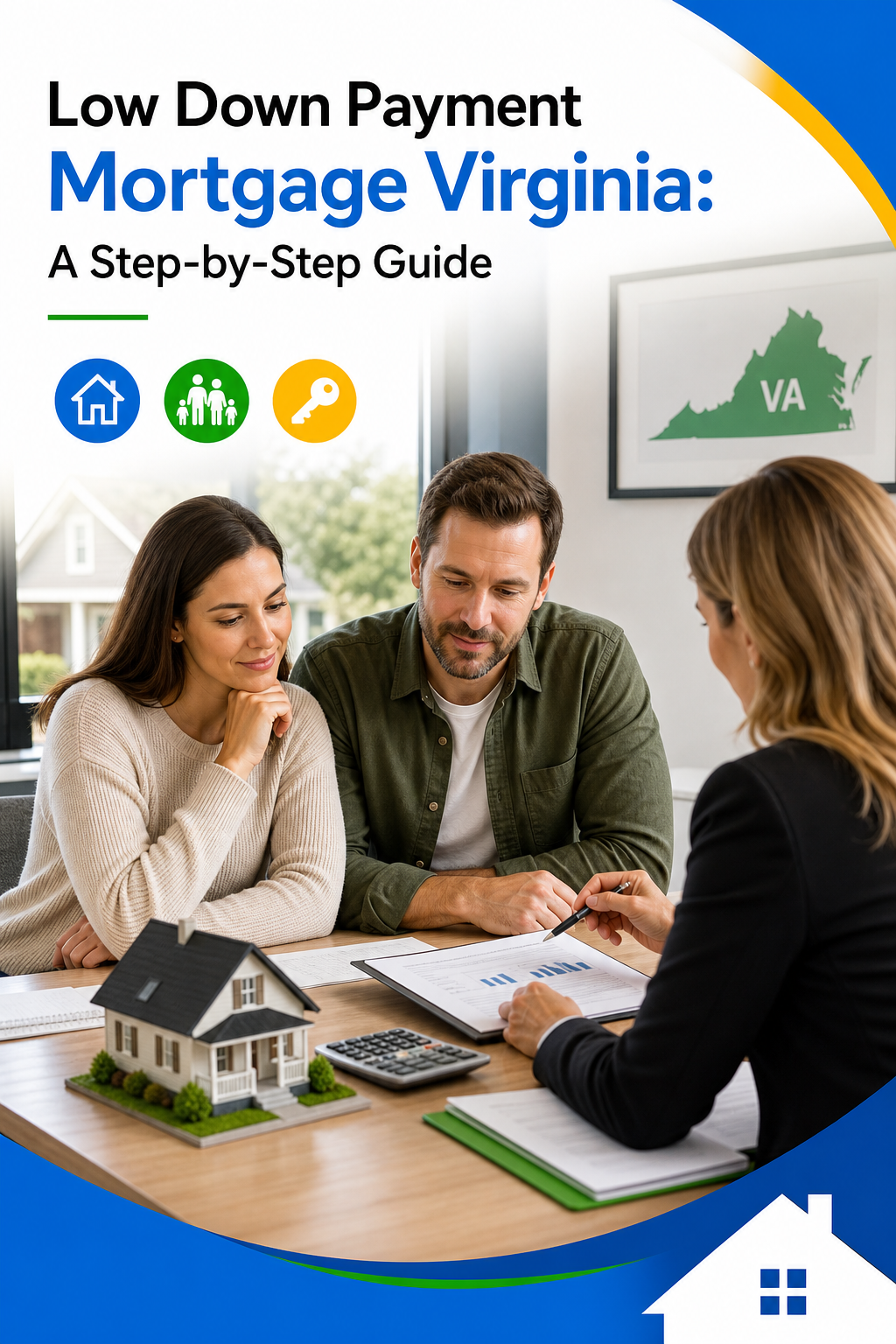
One key point: some lenders offer their own low-down-payment programs. At Up Lending, we work with a wide range of products , from conventional to non-QM , to find the right fit. But the first step is always understanding the baseline options.
According to the USDA Single Family Housing Direct Loan Program, eligible buyers can receive 0% down financing. And the VA Home Loan Program offers zero-down loans to qualified veterans. Both are powerful tools for Virginia homebuyers.
Step 2: Check Your Credit Score and Financial Readiness
Your credit score determines which loans you qualify for and what rate you’ll get. For a low down payment mortgage in Virginia, knowing your score early is critical. Here’s a breakdown of credit thresholds:
If your score is below 580, you may still qualify for an FHA loan with 10% down, but that’s not ideal for a low-down-payment strategy. Work on raising your score before applying. Simple steps: pay down credit card balances, correct errors on your credit report, and avoid new credit inquiries.
Also assess your debt-to-income ratio (DTI). Most lenders want DTI under 50%. For a $350,000 loan with 0% down, your monthly payment might be around $2,300 including taxes and insurance. To qualify, your gross monthly income should be at least $4,600. If you’re close, you might need a co-signer or lower the purchase price.
Remember, you don’t need perfect credit. The average credit score for approved low-down-payment borrowers in Virginia is around 640, 680. Focus on the program that fits your score.
For more details on conventional loan guidelines, official sources provide specific criteria. But the key is knowing where you stand before you apply.
Step 3: Get Pre-Approved with a Soft Pull to Protect Your Credit
Once you know your credit and income, it’s time to get pre-approved. But not all pre-approvals are equal. A soft pull pre-approval does not affect your credit score. You want that. Here’s how it works for a low down payment mortgage in Virginia.
First, a lender like Up Lending will ask for your income, assets, and basic credit information. They run a soft credit check (sometimes called a soft pull). This gives you a pre-approval letter that shows sellers you’re serious, without dinging your credit. Hard pulls happen later when you formally apply.
Why is this step important? In competitive Virginia markets like Richmond, , or , sellers often require a pre-approval letter before accepting an offer. Without it, you’re at a disadvantage. Also, a pre-approval reveals any potential issues , like a late payment or high DTI , early in the process.
When you get pre-approved, ask for a breakdown of closing costs and monthly payments. For a low-down-payment loan, you’ll likely have mortgage insurance (except VA). Know what that adds to your payment. For a $350,000 FHA loan at 6.5%, total monthly payment including MIP might be around $2,800. Compare that to a VA loan at same rate with zero MIP , about $2,500. Big difference.
Also, during pre-approval, some lenders offer a rate lock. You can lock in a rate for a set period (e.g., 60 days) before you find a house. That’s a smart move if rates are rising. Ask your lender about “Lock & Shop” options.
By Duane Buziak, Mortgage Maestro, NMLS#1110647
Step 4: Compare Lenders and Rates , Broker vs Retail
Not all lenders offer the same rates or service. For a low down payment mortgage in Virginia, comparing lenders can save you thousands. Here’s the difference between mortgage brokers and retail lenders.
Brokers, like Up Lending (operated by Duane Buziak at Coast2Coast Mortgage), work with multiple wholesale lenders. They can shop your loan to find the best rate. Retail lenders (like national retail lenders or local banks) only offer their own products. Brokers often get better pricing because they borrow in bulk. But not all brokers are equal. Some charge higher fees.
When comparing, get quotes from 2-3 different sources. Look at the interest rate, APR, lender fees, and closing costs. For a low-down-payment loan, the rate is critical. A difference of 0.25% on $350,000 saves $50 per month or $600 per year.
Also consider the lender’s expertise with low-down-payment programs. Some lenders specialize in FHA or VA and can simplify the process. For example, a lender who works with Virginia Housing can help you access down payment assistance.
In Virginia, median home prices vary by county. For example, some counties reported median sale prices in early 2026 near $385,000, while others were around $370,000. Knowing these numbers helps you estimate how much down payment you need.
Avoid lenders that push you toward a loan you don’t understand. Ask questions. If they can’t explain mortgage insurance, MIP, or rate locks, find someone else. Up Lending prides itself on transparency, you’ll know exactly what you’re getting.
For a complete look at mortgage options across Virginia, Refinance Loans – Up Lending can help you understand how refinancing later might reduce your payment.
Step 5: Gather Required Documents for Your Application
After you choose a lender and find a home, you’ll need to submit documents. The faster you provide them, the smoother the process. Here’s a checklist for a low down payment mortgage in Virginia.
- Government-issued ID (driver’s license, passport)
- Social Security card or ITIN
- Pay stubs for the last 30 days
- W-2s from the last 2 years
- Tax returns (if self-employed or commissioned)
- Bank statements for the last 2 months
- Recent statement from retirement accounts (if using for closing)
- Proof of any additional income (child support, bonuses)
- Copy of your pre-approval letter
- Purchase contract (signed by seller)
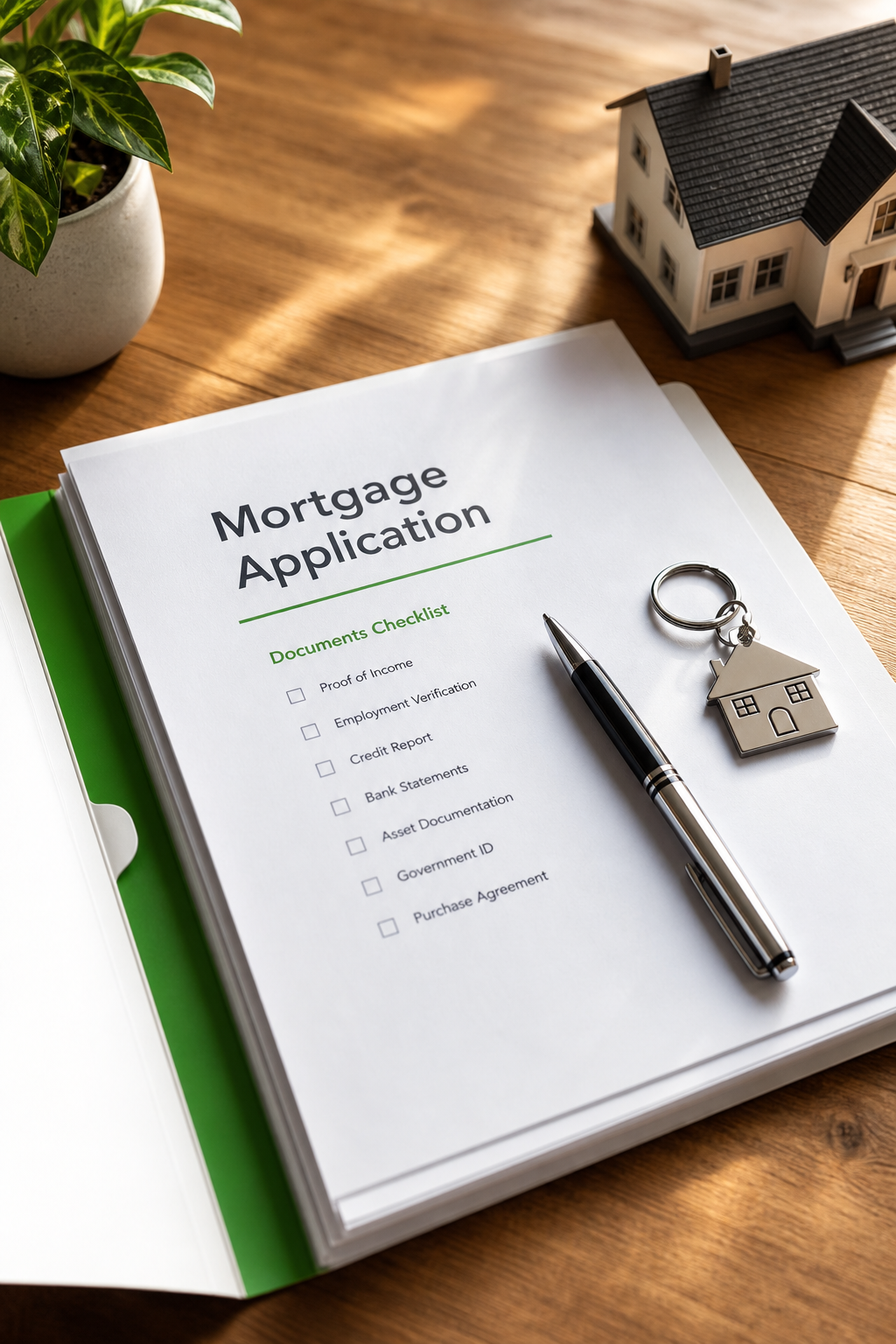
Having these ready cuts down processing time. Many lenders now use online portals where you upload documents securely. Make sure everything is legible. If you’re a veteran, you’ll need your Certificate of Eligibility (COE) for the VA loan. If you’re using USDA, the property must be in an eligible area , your lender can check.
Don’t be surprised if they ask for more. Underwriters sometimes request additional documentation , like a letter explaining a large deposit or a gap in employment. Be responsive. Delaying can push your closing date back.
For a full list of requirements, the Consumer Financial Protection Bureau (CFPB) provides a mortgage toolkit that’s very helpful.
Step 6: Lock Your Rate and Submit Your Application
This is the point of no return. Once you decide to lock your interest rate, you’re committed to that rate (unless you pay for a float-down option). Here’s how to handle it for a low down payment mortgage in Virginia.
A rate lock is a guarantee from the lender that they’ll honor a specific interest rate for a set period, typically 30 to 60 days. If rates go up after you lock, you’re protected. If they go down, you’re stuck unless you have a float-down clause. Float-downs usually cost extra, but can be worth it in a volatile market.
When should you lock? The best time is after you have an accepted offer and a closing date set. Locks usually cover enough days to get through underwriting and closing. Don’t lock too early , if the closing gets delayed, you might need to pay for a lock extension.
After locking, submit your full application. That means completing the 1003 form (Uniform Residential Loan Application) and paying any upfront fees (like the appraisal fee). Your lender will then start the underwriting process.
Be prepared for the underwriter to request more documents. Stay in touch with your loan officer. At Up Lending, we pride ourselves on communication and speed to close.
At Up Lending, we offer personalized support through every stage. Our team is dedicated to making the process clear and stress-free.
Step 7: Close on Your Virginia Home with Confidence
Closing day is when you sign the final paperwork and get the keys. For a low down payment mortgage in Virginia, the closing process is similar to a standard purchase, but there are a few things to watch for.
First, review the Closing Disclosure (CD) you receive at least three days before closing. Check the interest rate, monthly payment, closing costs, and cash to close. If something is different from what you expected, ask questions. You have the right to delay closing if there are errors.
Second, bring a certified check or arrange a wire transfer for the down payment and closing costs. With a low-down-payment loan, your out-of-pocket costs are lower, but you’ll still need to cover property taxes, insurance, and lender fees. Typical closing costs in Virginia range from 2% to 5% of the purchase price. On a $350,000 home, that’s $7,000 to $17,500. Some of that can be rolled into the loan.
Third, don’t make any major financial changes between loan approval and closing. Don’t open new credit cards, take out a car loan, or quit your job. It can jeopardize your approval.
Once you’ve signed, the lender funds the loan and you get the house. Congratulations! You’ve secured a low down payment mortgage in Virginia.
For more on the closing process, the CFPB’s closing guide is a great resource.
Frequently Asked Questions
What is the minimum down payment for a house in Virginia?
It ranges from 0% to 3.5% depending on the loan type. VA and USDA loans offer 0% down. FHA requires 3.5% with a 580 credit score. Conventional 97% loans need 3% down. Some Virginia Housing programs also allow 0% down for eligible buyers.
Can I get a mortgage in Virginia with a 600 credit score?
Yes. FHA loans accept 580 with 3.5% down. VA loans have no official minimum but many lenders require 580-620. USDA typically wants 640. If your score is 600, an FHA or VA loan is your best bet for a low down payment mortgage in Virginia.
Does Virginia have down payment assistance programs?
Yes. Virginia Housing offers down payment assistance and loans. These can be combined with FHA, VA, and conventional loans. The down payment assistance grant is a true grant that doesn’t need to be repaid. Contact a participating lender like Up Lending for details.
What are the income limits for a USDA loan in Virginia?
USDA loans have income caps that vary by county and household size. In most of Virginia, the limit is around $110,000 for a 1-4 person household. For specific limits, check the USDA eligibility website or ask your lender. Many areas in Central Virginia qualify.
Do I need mortgage insurance for a low down payment loan?
Usually, yes, unless it’s a VA loan (which has no mortgage insurance). FHA loans require MIP (mortgage insurance premium). USDA loans have an annual fee. Conventional loans with less than 20% down require PMI (private mortgage insurance). VA loans are the exception.
How long does it take to close a low down payment mortgage in Virginia?
Typically 30 to 45 days from application to closing. The timeline depends on the loan complexity and responsiveness of all parties. Appraisals and underwriting can cause delays. With a good lender, 30 days is achievable.
Conclusion
Getting a low down payment mortgage in Virginia is possible for many buyers. You don’t need 20% down. Start by understanding the loan options: VA, USDA, FHA, and conventional. Check your credit and get pre-approved with a soft pull. Compare lenders, consider a broker like Up Lending for better rates and personalized service. Gather your documents early, lock your rate at the right time, and close with confidence.
The math works: a $350,000 VA loan at 6.5% vs. an FHA loan at 6.5% saves $200+ per month thanks to no mortgage insurance. Over five years, that’s over $12,000 in savings. Take advantage of these programs.
If you’re ready to start your home buying journey, contact Duane Buziak, Mortgage Maestro, at (804) 212-8663 or visit DuaneBuziakMortgageMaestro.com. Our team at Up Lending will guide you every step of the way.
This article is for educational purposes only and does not constitute financial or legal advice.
Duane Buziak, Mortgage Maestro | NMLS: 1110647 | Licensed in VA · FL · TN · GA | Top Originator 2025 & 2026 | VA Broker of the Year 2024-2025 | Top 1% Nationwide | DuaneBuziakMortgageMaestro.com | (804) 212-8663
Equal Housing Lender. This is not a commitment to lend. Duane Buziak NMLS #1110647. Licensed in Virginia, Florida, Tennessee, and Georgia.