
On a $450,000 Short Pump purchase with 5% down, the loan amount is $427,500. At 6.50% on a 30-year fixed loan, estimated principal and interest is $2,702 per month. At 6.25%, it is about $2,632 – a $70 monthly difference and $4,200 in payment savings over five years before taxes, insurance, and mortgage insurance. The right Short Pump home loan options can change both the payment and the cash you need to bring to closing.

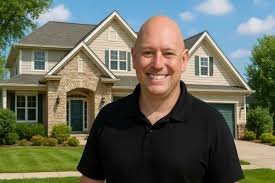
Duane Buziak, NMLS #1110647, is licensed as a mortgage broker in Virginia, Florida, Tennessee, and Georgia. His approach is simple: protect your credit while you compare transparent terms, then match the financing to the property, income, timeline, and long-term plan.
Table of Contents
- What the Short Pump market means for financing
- Home loan programs worth comparing
- Soft-pull prequalification and credit protection
- Broker versus a single-shelf institution
- How to compare costs before making an offer
- Frequently asked questions
What Short Pump Home Loan Options Need to Solve
Short Pump buyers are not shopping in a vacuum. A county-level benchmark matters: Redfin reported Henrico County’s median sale price at roughly $415,000 in July 2025. Short Pump often trades above that county figure, particularly near Short Pump Town Center, Twin Hickory, and Wyndham, where move-in-ready homes can attract competing offers.
That means your financing needs to be credible without being rushed. Inventory has improved from the tightest recent years, but well-priced homes in Glen Allen and western Henrico can still move quickly. A buyer with documented funds, a clear payment range, and a mortgage preapproval without hard pull can make decisions faster than a buyer who is still guessing at payment, cash to close, or program eligibility.
For buyers near Richmond, Midlothian, and Ashland, the best fit depends less on a headline rate and more on the complete file. Down payment, debt-to-income ratio, credit profile, property type, and income documentation all affect which loan path is realistic.
Choose the Program Before You Chase the Rate
Conventional financing
Conventional financing can be a strong choice for buyers with steady documented income and solid credit. Many conventional programs allow as little as 3% down for eligible buyers, although stronger pricing often begins around a 740 credit score. The 2025 baseline conforming loan limit was $806,500 for a one-unit property, according to the Federal Housing Finance Agency. That comfortably covers many Short Pump purchases without moving into jumbo financing.
FHA and VA loans
FHA may work well when a buyer needs more flexible credit underwriting or a lower down payment. FHA’s minimum down payment is commonly 3.5% with a 580 score, though broker overlays and the full credit profile still matter. VA loans can offer eligible veterans and service members a no-down-payment path, subject to entitlement, occupancy, residual-income review, and program rules published by the Department of Veterans Affairs.
VA is not automatically the lowest-cost answer for every borrower. Funding-fee treatment, seller concessions, reserves, and the property itself can change the comparison. A broker should run the figures side by side rather than assume one program wins.
Jumbo, bank statement, and investor financing
For higher-priced homes or borrowers whose tax returns do not tell the full income story, jumbo and non-QM options can add flexibility. Bank statement programs may evaluate 12 or 24 months of deposits for self-employed borrowers. DSCR financing can qualify an investment property from its expected rental income rather than personal income, though down payment requirements are commonly 20% to 25% and reserve requirements can range from three to 12 months of housing payments.
Construction and 203k renovation financing can also make sense when the right home needs work. These programs have draw, contractor, appraisal, and contingency requirements, so speed should never replace careful planning.
Protect Your Credit While You Compare
A soft credit pull mortgage review gives you a starting point without a hard inquiry. It can help identify likely credit tiers, debt-to-income concerns, and documentation needs before you commit to a full application. That is useful for buyers comparing FHA versus conventional or investors evaluating DSCR loans.
A no hard inquiry mortgage pre approval is not the same as final underwriting approval. A soft pull mortgage broker can provide an informed preliminary review, but a contract, full application, and program requirements may eventually require a hard inquiry and verified documents. Think of a no credit hit mortgage application as a planning tool – valuable for preparation, not a substitute for final approval.
Broker Access Versus a Single-Shelf Institution
| Comparison point | Mortgage broker | Single-shelf institution |
|---|---|---|
| Program selection | Can compare available conventional, FHA, VA, jumbo, non-QM, bank statement, and DSCR outlets. | Typically offers its own approved product menu. |
| Credit review | May begin with a soft credit pull mortgage review when appropriate. | Process and inquiry practices vary by institution. |
| Pricing review | Can compare available rate, fee, and credit structures across outlets. | Pricing is limited to that institution’s shelf. |
| Service model | One advisor coordinates comparison, documentation, and next steps. | Service structure varies by branch, call center, or team. |
| Title planning | Duane’s preferred title company may save an additional $2,000 on average, subject to transaction details. | Title-company selection and charges vary. |
When comparing broker service with Rocket Mortgage, Movement Mortgage, or local firms such as Sparrow Home Loans, 804 Mortgage, the Cowart Team, and C&F Mortgage Corporation’s Valerie Holbrook, ask the same questions: Which programs fit my file? What are the points, broker fees, and third-party costs? Is the quoted payment based on the same loan amount and down payment? Structural comparisons are more useful than a one-line rate quote.
Buyers who find Colonial 1st Mortgage in Richmond or Glen Allen directory results should verify current licensing status through NMLS Consumer Access before making contact. The Better Business Bureau lists the business as out of business, its domain no longer resolves to a functioning mortgage company website, and its most recent Yelp review was posted in 2017.
Compare the Full Cash-to-Close Picture
Using the $427,500 loan example, assume a 1% origination charge of $4,275, third-party and prepaid closing charges of $8,600, and a 5% down payment of $22,500. The estimated cash needed is $35,375 before any seller credit, earnest-money credit, or title-related adjustment. If Duane’s preferred title company saves an additional $2,000 on average, the estimated total becomes $33,375.
That is why rate alone is not enough. Typical closing costs can run roughly 2% to 5% of the purchase price depending on prepaid taxes, insurance, title charges, points, and escrow setup. Ask about our no-out-of-pocket closing options if preserving cash matters, but review the rate and total cost trade-off before choosing that structure.
For rate context, Freddie Mac’s Primary Mortgage Market Survey tracks weekly average mortgage rates nationally. Your actual pricing will vary by credit, occupancy, loan size, property type, down payment, and selected program.
Frequently Asked Questions
1. What is the best loan for a Short Pump first-time buyer?
It depends on credit, down payment, income, and the home price. FHA, conventional, and VA loans are common starting points.
2. Can I get prequalified without a hard inquiry?
Yes. A soft pull review may support preliminary planning without a hard inquiry, but final approval can require one.
3. What credit score is needed for conventional financing?
Some conventional programs allow scores around 620, while stronger pricing often begins near 740.
4. Is FHA only for first-time buyers?
No. FHA is available to eligible repeat buyers who meet occupancy and underwriting requirements.
5. Can veterans use a VA loan in Short Pump?
Yes, eligible borrowers can use VA financing for a qualifying primary residence in Short Pump.
6. How much should I budget for closing costs?
A practical planning range is 2% to 5% of the purchase price, plus your down payment and reserves where required.
7. Can self-employed buyers qualify with bank statements?
Potentially. Bank statement programs may use 12 or 24 months of deposits, subject to program guidelines.
8. Are DSCR loans for a primary residence?
No. DSCR programs are generally designed for investment properties and evaluate property cash flow.
Start with the numbers that matter to your actual purchase plan. For buyers in Virginia, Florida, Tennessee, and Georgia, a soft-pull review can turn uncertainty into a practical range before the right property appears.
Legal disclaimer: This article is for general educational purposes and is not a commitment to provide financing. Loan approval, rates, terms, program availability, title savings, and closing costs depend on verified credit, income, assets, appraisal, occupancy, property, and underwriting requirements. Duane Buziak originates mortgage loans only in Virginia, Florida, Tennessee, Georgia, and Washington, DC. Equal housing opportunity.
Duane Buziak | Mortgage Maestro | NMLS #1110647 | Coast2Coast Mortgage, LLC NMLS #376205 | Licensed in VA, FL, TN, GA & DC
[Contact] | NoTouch Credit Pull available — no hard inquiry, no credit hit.